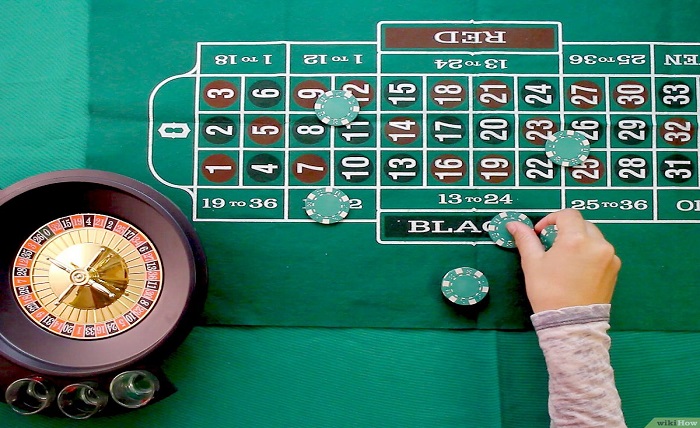
Every high-stakes decision carries an emotional charge. Whether a player watches a roulette wheel spin or a reader absorbs a line of shayari, the response begins internally. Anticipation. Hope. Doubt. Confidence. Regret.
Professionals often assume that good decisions come from logic alone. In reality, emotion shapes judgment long before logic steps in. Games of chance and poetic expression sit on opposite ends of culture, yet both expose how humans react to uncertainty.
Roulette compresses decision-making into seconds. Shayari distills emotion into lines. One tests probability. The other explores feeling. Both reveal the same truth: without emotional awareness, consistency collapses.
This article examines how emotional states influence roulette decisions, how structured tools support discipline, and how poetic expression mirrors the same psychological patterns professionals face in risk-based environments.
How Emotional States Influence Risk Decisions in Roulette
Understanding how roulette platforms work is often the first step toward disciplined play. Practical guidance on setting up and accessing roulette apps — such as the step-by-step overview available here — helps remove technical uncertainty and creates a more controlled starting point for decision-making. When setup friction disappears, players can focus on managing behavior rather than reacting to confusion or stress.
Roulette itself does not challenge intelligence. It challenges emotional stability.
Every spin resets probability. Yet players rarely respond neutrally. A loss creates tension. A win sparks confidence. A near miss amplifies urgency. These emotional shifts shape behavior faster than any understanding of odds.
Emotion as the Hidden Variable
When discipline breaks down, it rarely happens during calm moments. It usually follows:
- a sudden loss that feels unfair
- a short winning streak that feels “safe”
- pressure to recover quickly
Emotion narrows perception. The player stops evaluating risk and starts reacting to feeling. Instead of following structure, they follow momentum.
This is where environment matters. Clear interfaces, predictable mechanics, and stable platforms reduce cognitive load. They do not improve probability, but they help players avoid emotional drift by keeping attention on decisions rather than distractions.
The Cost of Emotional Drift
Once emotion takes over, behavior becomes predictable:
- stakes increase without planning
- patterns appear where none exist
- exits are delayed “just one more round”
None of these actions change the math. They only increase exposure.
The same pattern appears in professional settings—trading, negotiations, crisis management. Roulette simply compresses the feedback loop. Emotion surfaces faster. Consequences arrive sooner.
Recognizing this dynamic is the foundation of consistency. Probability remains static. Emotional control does not.
Shayari as a Mirror of Emotional Processing and Control
Shayari exists for the opposite reason roulette does. It slows emotion down instead of accelerating it.
Where roulette compresses feeling into seconds, poetry stretches it into reflection. A verse captures longing, patience, restraint, or loss — then gives it structure. That structure is the key.
Why Expression Creates Control
Unexpressed emotion leaks into behavior. Expressed emotion becomes manageable.
Shayari works because it:
- names emotional states clearly
- gives them boundaries
- transforms reaction into observation
This is the same skill disciplined roulette players develop. They do not suppress emotion. They acknowledge it, then refuse to act on it impulsively.
Professionals can borrow this framework.
A Shared Psychological Loop
Both roulette play and poetic expression follow a similar mental sequence:
- stimulus appears
- emotion arises
- awareness interrupts reaction
- decision follows
When step three is missing, chaos follows.
In poetry, emotion without structure becomes noise. In roulette, emotion without structure becomes loss. Discipline emerges only when feeling is acknowledged but not obeyed.
Translating Emotional Awareness Into Better Decisions
Professionals who perform well under uncertainty tend to:
- recognize emotional triggers early
- pause before acting
- rely on predefined frameworks
This is no different from a player exiting a round according to plan or a poet choosing restraint over excess.
Conclusion
Roulette and shayari seem unrelated. One spins numbers. The other arranges words. Yet both expose the same psychological truth: emotion decides before logic notices.
The roulette wheel has no memory. Probability does not respond to hope or fear. Shayari reminds us of that reality by giving emotion form instead of letting it dictate action.
For professionals, decision-makers, and serious players alike, the lesson is clear. Mastery does not come from prediction. It comes from awareness. When emotion is observed instead of obeyed, consistency becomes possible.
Whether facing a spinning wheel or a difficult decision, the discipline remains the same:
feel fully — decide calmly — act deliberately.